The Feedback Wheel: A Tool for Having Difficult Conversations With Your Partner
Having difficult conversations with your partner isn't always easy. When we're hurt, frustrated, or feeling disconnected, it's easy to slip into blaming, defending ourselves, or trying to prove we're right. Before we know it, we're no longer talking with each other. We're reacting to each other.
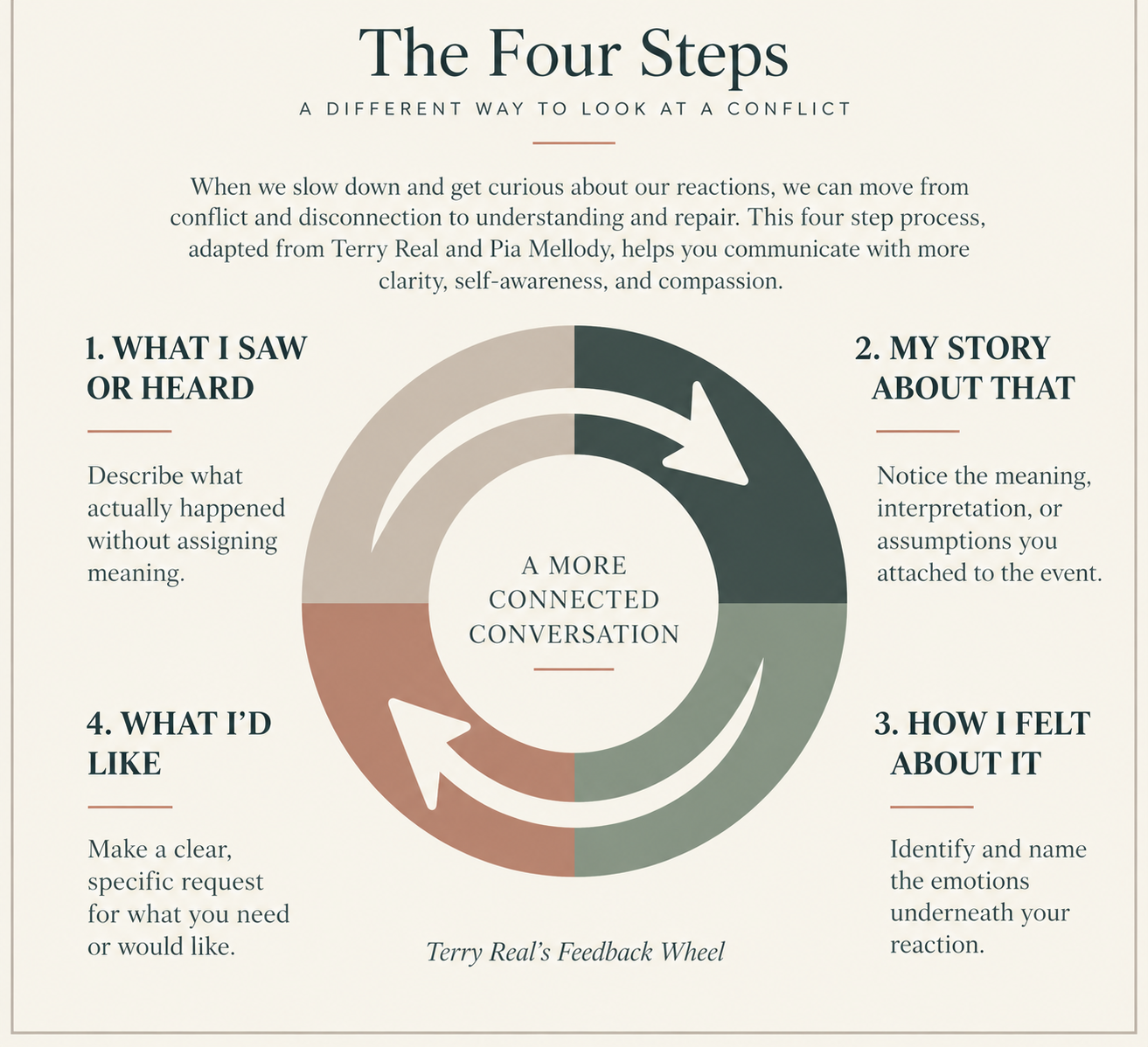
The Feedback Wheel is a four-step approach to having difficult or sensitive conversations and moving toward repair. I'm trained in Relational Life Therapy (RLT) with Terry Real, who developed this tool to help couples communicate more effectively while staying connected to themselves and each other.
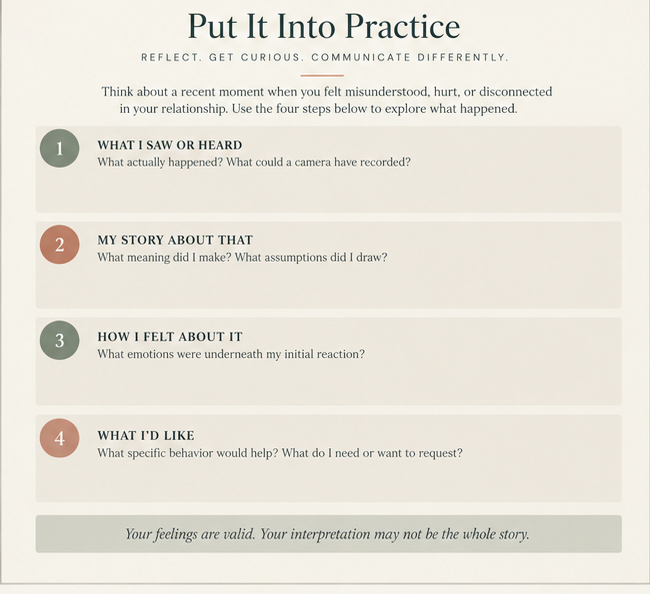
I often encourage couples to save the Feedback Wheel as a screenshot on their phones so they can pull it up when a difficult conversation comes up. It can also be helpful to write out what you want to say before approaching your partner. This gives you a chance to slow down, get clear on your own experience, and think about what you actually want your partner to understand.
The goal isn't to get the words exactly right or to avoid conflict altogether. It's to practice taking responsibility for your part, expressing yourself without blame, and making room for your partner's experience, too. That's where the possibility for repair begins.
Below, you can save the images and use them in the future. The tool works best when both partners are willing to participate and are able to listen. If things are escalating, take a pause and return when you're both ready. This is a starting point. You don't have to get it perfect to begin repairing. Additionally, this can help guide you in organizing your thoughts which can be challenging to do when bringing up something sensitive. Most couples cycle through conflict and dynamics and get stuck because they are living out one of the steps. If you are trying to make changes in your relationship or trying to understand your cycle reach out for help.
The Feedback Wheel can help all relationships, including friendships. It' helps you get more clear with yourself and others.
Written by Sarah Nunes, LCSW
Relationship & Trauma Therapist
EMDR Certified Therapist and EMDRIA Approved Consultant in Training™